
- True local stories can command global attention.
- Multi-platform movement, documentary, digital twin, game, and real economic upliftment.
- Authentic, community-driven culture becomes unstoppable.
- This didn’t go viral, it went valuable,
Every once in a while, a cultural moment cuts through noise, borders, and budgets. It doesn’t come from a major city, a global brand, or a billion-rand campaign. It comes from community. From heritage. From young hands bending scrap wire into possibility.
Philipstown, a tiny Karoo town most people can’t place on a map, has become one of South Africa’s most powerful case studies in how culture, creativity, and community can scale into global impact when the story is told with integrity.
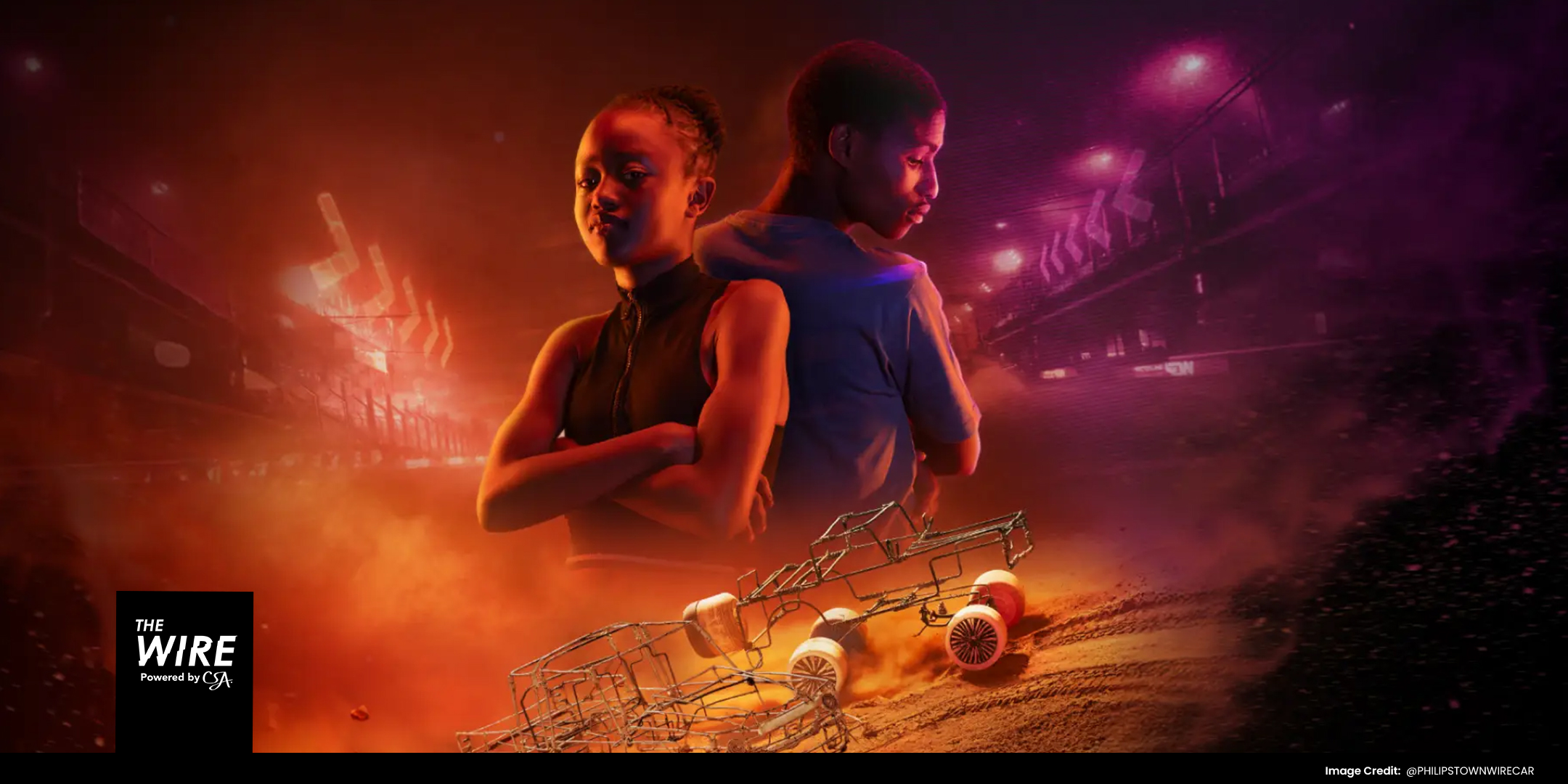
Today, the WireCar Grand Prix (WGP) is more than a local race. It’s a movement. A documentary on Prime Video. A mobile game played around the world. An e-commerce ecosystem supporting real artisans. And a blueprint for brands hungry to build meaningful, sustainable change through culture.
A Culture Story the World Didn’t See Coming
For 14 years, the children of Philipstown have gathered barefoot on dusty streets to race the wire cars they’ve built by hand. What looks like play is actually engineering, imagination, and resilience. Steering systems. Suspension. Design customisation. Innovation born from materials the world throws away.
This is creativity in its purest form, the kind that can’t be taught, only lived.
When the documentary The Philipstown WireCar Grand Prix launched on Amazon Prime, it struck a global nerve. Despite being deeply local, told mainly in Afrikaans and Xhosa, its impact was immediate. Viewers from Asia to Europe to North America found themselves moved by a story that was never marketed to them, only shared with honesty.
Because culture, when rooted in truth, needs no translation.
A Multi-Platform Movement: From Local Story to Global Ecosystem
The success of the WGP wasn’t accidental. It was multi-layered cultural architecture: the kind brands often try to design artificially. Philipstown built it naturally:
- Documentary: A human-centred narrative of hope and creativity, globally distributed via Prime Video.
- Digital Mapping + CGI: The town was scanned, rebuilt, and reimagined for a digital twin, turning kids into larger-than-life heroes with cars styled from their imaginations.
- Mobile Game: A free-to-play global racing experience that brings revenue back into the community.
- E-commerce: Hand-crafted wire cars, apparel, and merchandise create sustainable income for local artisans.
- Annual Event: The real-world WireCar Grand Prix remains the heartbeat ; the cultural anchor that keeps the story authentic and alive.
This isn’t a campaign. It’s a circular cultural economy.
International Reception: Proof That Local Stories Scale
Global critics praised its “human story,” its emotional honesty, and the dignity with which the children are portrayed, not as charity subjects, but innovators. Siya Kolisi amplified it to his millions-strong audience. International awards juries highlighted its emotional power. And audiences connected deeply with the metaphor at its centre:
One South African review raised an important tension: Who benefits? The answer matters. Every revenue stream, views, game downloads and merch feeds directly into coding, computer skills, and robotics programmes for Philipstown’s kids. This is not storytelling for optics; it’s storytelling for outcomes.
Lessons for Brands: South Africa Has the Blueprint
Brands keep searching for the next cultural trend. Meanwhile, South Africa keeps producing masterclasses in cultural relevance. The WireCar Grand Prix offers five vital lessons:
1. Culture is the strategy, not the decoration.
Don’t “add culture” to a campaign. Build from it. Philipstown didn’t need a tagline; it had truth.
2. Local stories scale when they are real.
The world isn’t looking for polish. It’s looking for humanity.
3. Multi-platform is the new multiplier.
When your story lives as a film, an event, a game, and a product, it becomes an ecosystem, not a moment.
4. Community must benefit, not be borrowed.
Cultural storytelling without real upliftment is exploitation. Consumers feel that instantly.
5. Sustainable change happens when creativity and dignity collide.
Give people tools, access, and belief, the culture will take care of the rest.
The Future Belongs to Brands Who Build Like Philipstown
The WireCar Grand Prix didn’t go global because it tried to. It went global because it mattered. Because a small Karoo town showed the world that innovation doesn’t only live in tech hubs or boardrooms, it also lives in dusty streets, in handmade dreams, and in communities that refuse to be forgotten.
This is the new frontier of cultural marketing.
Not campaigns.
Not activations.
But deeply human stories that fuel real development, real pride, and real global attention.
South Africa has always had the creativity. Philipstown proved we also have the blueprint.