
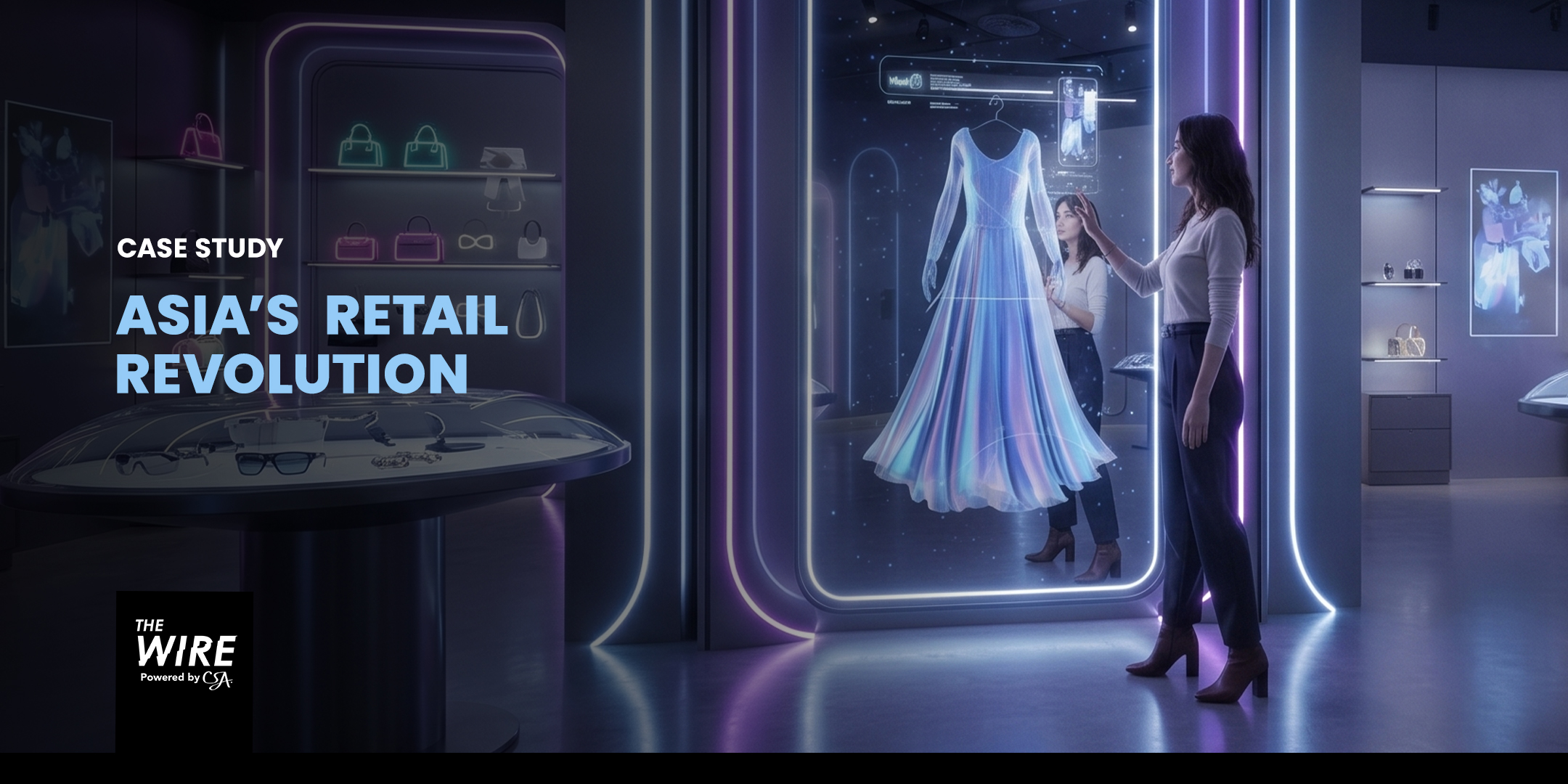
- The APAC (Asian Pacific Region) will be a $36 trillion culture engine
- Experiences outperform products and truly drive loyalty
- Storyliving converts consumers into participants
- Kidult culture and economy is reshaping retail identity
We all know Asia is living in the future. What’s unfolding across its retail landscape is a blueprint for how culture, commerce, and experience will converge globally. By 2035, APAC (Asia Pacific) is projected to become the world’s largest consumer market, with private consumption reaching $36 trillion.
But the real signal for CMOs isn’t scale, it’s how culture is being engineered into commerce.
Across Asia, retail is shifting beyond product-led environments. Consumers no longer just buy, they seek experiences that fuse identity, imagination, and entertainment. These markets are becoming live laboratories for marketing’s next era.
The Rise of “Wonderland Retail
From Tokyo to Shanghai to Seoul, stores now resemble cinematic worlds. Brands are building immersive spaces driven by narrative, characters, and fandom, what we can call the “Wonderland economy.” Fuelling this is the rise of the kidult consumer: adults deeply engaged in pop culture, gaming, and collectibles.
For them, purchasing isn’t transactional, it’s participatory. Retail becomes a stage for identity.
From Storytelling to Storyliving
The shift from storytelling to “Storyliving” is one of the clearest signals.
Instead of static displays, brands are creating environments where consumers interact with narratives in real time, through immersive installations, digital layers, and theatrical spaces.
The objective: turn commerce into culture.
When consumers emotionally participate, they stay longer, spend more, and share more.
The Power of Play
Technology is accelerating this shift. XR, gamification, and interactive layers are turning retail into participatory ecosystems.
Shoppers explore, unlock content, and interact with brand worlds. The experience becomes less about buying, and more about playing.
The payoff is clear: moments of joy and curiosity drive higher repurchase and stronger advocacy.
What This Looks Like in Practice
Asia’s retail scene in 2026 is already delivering:
Seoul – Immersive Beauty & Fashion
Tamburins’ Samcheong-dong flagship blends scent, sculpture, and Korean heritage into a multi-sensory space. Ader Error’s Seongsu location transforms retail into a futuristic, cinematic experience.
Shanghai – Experiential Luxury
Plaza 66’s Pavilion Extension expands luxury retail through curated, intimate environments integrated with public space.
Kidult Retail Expansion
Toys “R” Us Asia’s Toy+Play concept merges nostalgia with interactive zones, targeting adults raised on 80s–90s culture.
Tech-Driven Retail
Technology is playing a key role in enhancing the shopping experience in stores by integrating artificial intelligence (AI) into store designs to improve both customer and staff experiences.
Why CMOs Should Pay Attention
Asia has consistently predicted global marketing shifts, from mobile commerce to live-stream retail. This evolution will be no different.
Three clear lessons:
1. Culture is the new storefront
Retail must express identity, not just inventory.
2. Experiences outperform transactions
Moments of wonder drive deeper loyalty than product features.
3. Imagination fuels commerce
World-building unlocks emotional engagement at scale.
The Bigger Shift
Consumers are no longer just customers, they are participants in cultural universes.
The brands that win won’t just sell products. They will build worlds people want to live inside.
That blueprint is currently being written in Asia. Time to upgrade your paradigm.