
- Marketing targets the wrong brain.
- Multisensory experiences increase brand recall by up to 65%.
- Neuromarketing predicts sales more accurately than surveys.
- Immersive environments can increase dwell time by over 7x.
CMOs have always been in a battle for attention. The next decade will be about fighting for sensation. The future of culture marketing is not what people see, it’s what they feel.
Here’s the shift: neuroscience shows that up to 94% of decisions are subconscious, meaning most brand choices happen before rational thought. Traditional marketing: visuals, copy, video, targets the conscious mind. Haptic feedback and neuromarketing target the body and subconscious, where loyalty, memory, and emotional connection are formed. This is why this space matters now.
What Is Haptic Feedback and Why It Changes Cultural Immersion
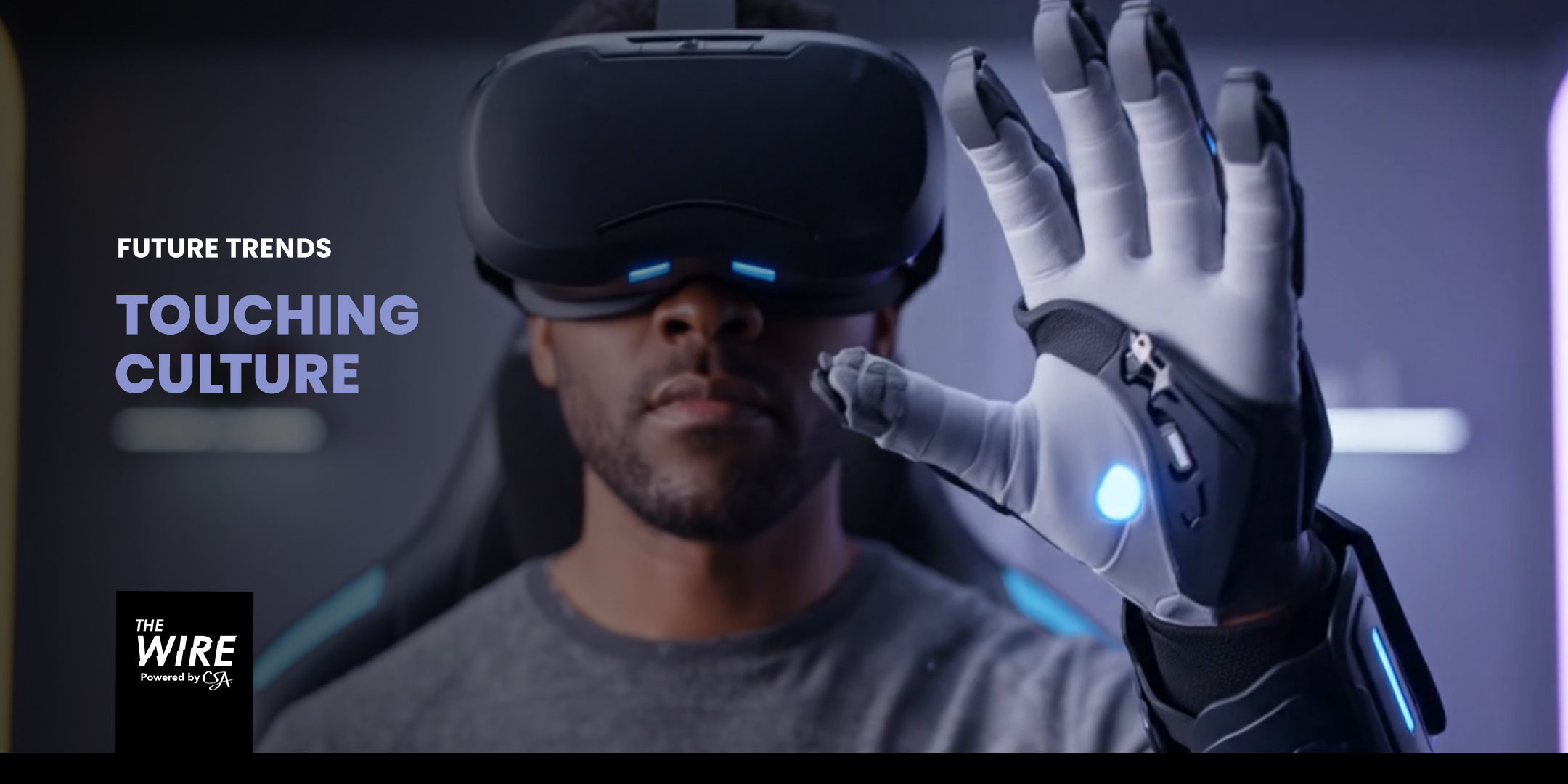
Haptic feedback is technology that simulates touch using vibrations, motion, pressure, and texture. Think VR gloves that let you feel digital objects, suits that pulse to music, or seats that vibrate during film scenes.
This matters because touch is one of the fastest emotional triggers. The brain processes tactile signals quickly, and tactile experiences increase memory encoding and emotional attachment.
Real-world example:
bHaptics TactSuit, used in VR gaming and experiences, allows users to feel impact, movement, and environmental sensations. Studies show tactile feedback can increase immersion levels by up to 7x compared to visual-only VR.
Another example closer to home:
Sensiks sensory pods at the V&A Waterfront combine haptics, scent, and sound to create full sensory environments used for wellness and emotional regulation. Multi-sensory environments show higher retention and emotional engagement than single-sensory experiences.
Now apply that to culture marketing: imagine a music festival VR experience where fans feel the bass, a sports activation where runners feel terrain, or a retail installation where shoppers feel product textures digitally. Elevate this into wellness, beauty, and lifestyle branding and you move from advertising into memory creation.
And memory is what culture is built on.
What Is Neuromarketing and Why It Predicts Behaviour Better Than Surveys
Neuromarketing uses tools like EEG, fMRI, eye-tracking, and biometric sensors to measure how people actually respond to ads, products, and experiences, instead of what they say they feel.
This matters because traditional research is flawed. People can’t accurately explain their behaviour, but their brains can.
Real-world example:
Neurons Inc uses brain data to predict ad performance and has shown that neural responses can predict sales more accurately than traditional surveys.
Another major case:
Meta (Oculus VR research) found that VR interactions triggered emotional responses similar to real-life interactions, meaning virtual brand experiences can create real emotional bonds.
This is the breakthrough: neuromarketing tells you what people will feel before you spend media budget.
Why This Matters for Culture Marketing
Culture marketing is not about reach anymore. It’s about belonging, identity, and emotional memory. Haptic and neuro turn brand experiences into rituals, and rituals build culture.
Research shows:
- Multi-sensory campaigns increase recall by 65%
- Purchase intent can increase 2–3x
- Dwell time increases significantly in immersive environments
This is why brands like IKEA are experimenting with AR and sensory retail to increase engagement and purchase intent.
CMOs, This Is Your Future.
This is not science fiction. The entry point is already here.
Next steps for brands:
- Pilot VR and haptic brand experiences (events, retail, music, sport).
- Use neuromarketing testing before launching campaigns.
- Measure emotional response, not just impressions.
- Build multi-sensory brand worlds, not just campaigns.
Because the future of marketing will not be the brands people see the most.
It will be the brands people feel the most.