
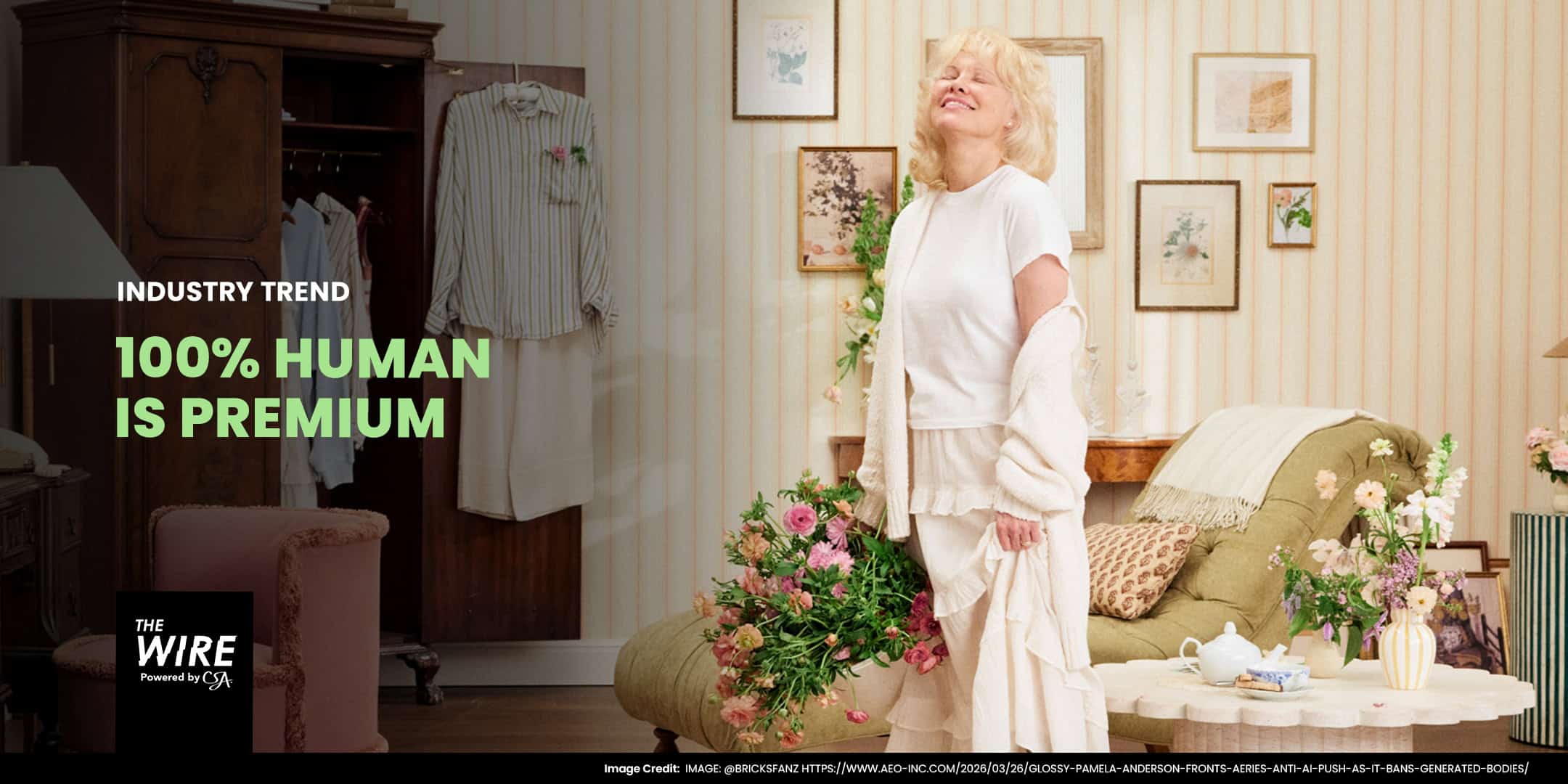
- 75% engagement spikes on “human-made” campaigns reveal consumer crave realness
- Aerie’s anti-AI pledge generated 40,000+ Instagram likes
- Heineken, Polaroid and Cadbury are winning cultural relevance by openly celebrating human creativity
- Marketing is entering its “organic food era
“Trustfluence” emerged as a cultural curiosity in marketing at the beginning of 2026. But with a handful of billionaires increasingly controlling the media landscape, shaping global political narratives, and accelerating the unchecked expansion of AI across surveillance, warfare, and society, one thing is becoming undeniable: belief in what is true and real is now one of the most valuable currencies in modern marketing.
The irony is that AI was supposed to help brands feel more personalized and efficient. Instead, overuse is creating emotional distance. Consumers are now encountering synthetic influencers, AI-generated product photography, fake testimonials, cloned voices, and automated brand storytelling at scale.
The result? Audiences are now sceptical of everything.
Being Human is cool again
Research from LinkedIn Marketing Collective suggests that “human-made” content is increasingly perceived as premium, particularly among younger audiences exhausted by algorithmic sameness.
This mirrors broader cultural shifts already happening across fashion, music, food, and luxury. Handmade, imperfect, local, and emotionally real experiences are regaining value precisely because the digital world feels overly manufactured and at the far end..fake.
Marketing is entering its “organic food” era. And the brands that understand this early will win disproportionately.
The examples telling the story:
In a growing wave of advertising campaigns, brands like Heineken, Polaroid and Cadbury are positioning themselves against artificial intelligence, proudly celebrating their work as “human-made.”
Across television, New York billboards and social media, these campaigns are signalling something far bigger than marketing differentiation.
Even Apple’s latest hit series, “Pluribus,” closes with the phrase “Made by Humans,” reinforcing a wider cultural shift taking place around creativity and technology.
At the same time, brands such as H&M and Guess have faced backlash for replacing human talent with AI-generated brand ambassadors.
One of the strongest examples of a successful “No AI” campaign comes from Aerie (American Eagle Outfitters), whose Anti-A.I pledge generated:
- more than 40,000 Instagram likes
- over 500 comments,
- drove a 75% increase in engagement across Instagram posts between October 6–19, 2025.
Together, these moments point to a deeper cultural shift emerging around technology and creativity, as people begin returning to the value, authenticity and emotional connection of human creativity in the age of AI.
The behaviour trends emerging:
- higher engagement
- increase in conversions
- increase in trust scores among millennials and Gen Z audiences
For CMOs, this signals a major strategic pivot for 2027. The competitive advantage is no longer just scale. It is credibility.
Consumers do not necessarily hate AI. What they hate is deception. That distinction matters.
The brands creating long-term equity will not be the ones using the most AI. They will be the ones using AI transparently while protecting human creativity, emotion, and cultural understanding at the center of storytelling.
So what does this mean for your brand?
- Transparency can no longer be optional. Platforms including YouTube AI disclosure policy and TikTok AI content labeling are already enforcing disclosure requirements around synthetic content.
- Brands need to audit whether they are accidentally contributing to distrust. Over-polished campaigns, synthetic visuals, and emotionally empty automation may be damaging brand intimacy more than improving performance.
- Human presence itself is becoming a luxury signal with Real creators, employees, communities, moments, imperfections.
Those are becoming strategic differentiators in a feed dominated by machine-made sameness. The future of marketing will not be AI versus humans. It will be brands that use AI to scale production while still protecting the emotional depth only humans can create.
Because in 2027, “100% Human” will become more than a creative choice.
It will become a trust label.