
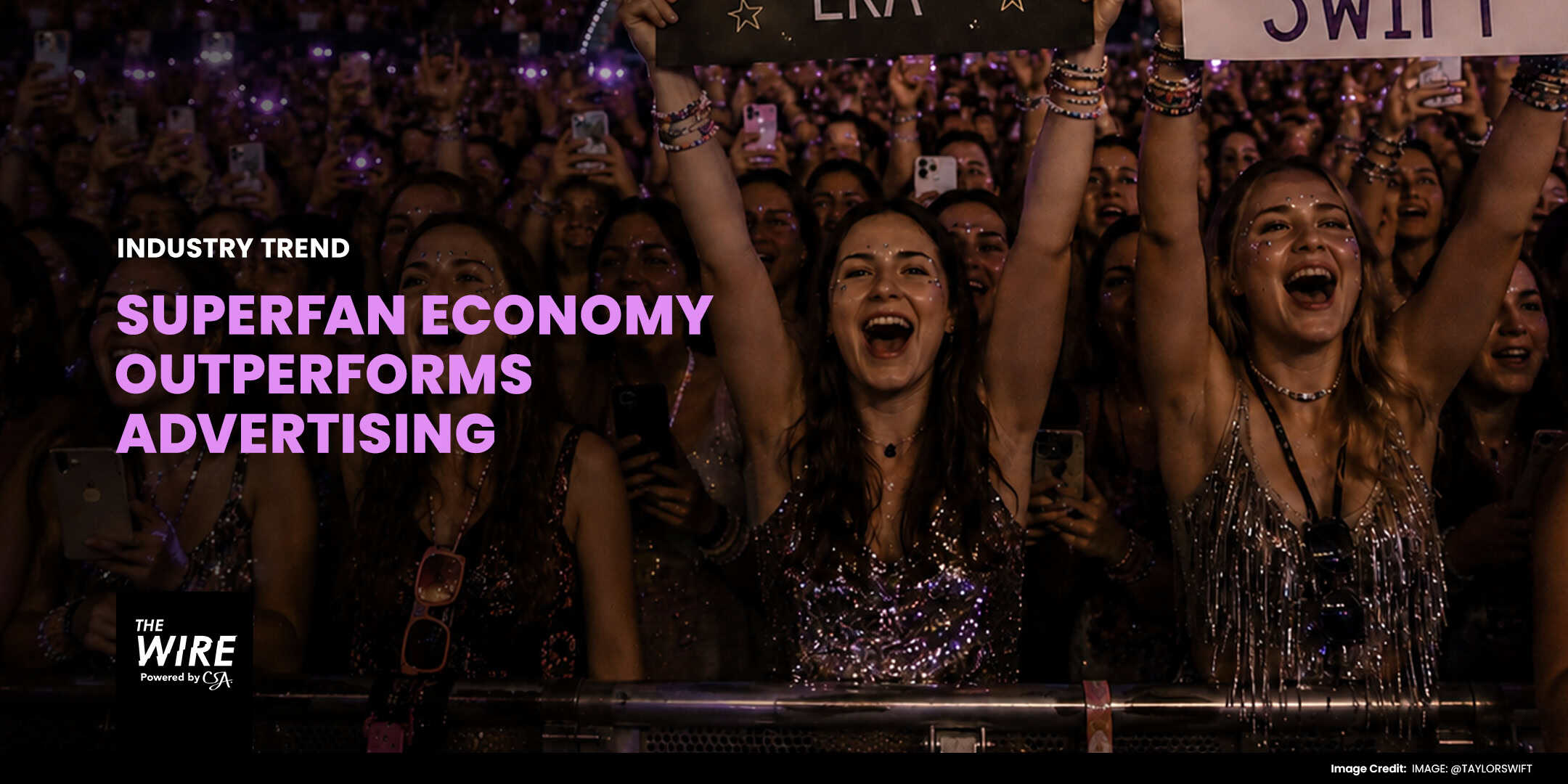
- 96% of consumers now identify with fandom;, culture is no longer niche.
- Taylor Swift fans spent an estimated $260 million in 2025.
- 60% of fans are more likely to buy from brands tied to their favourite artists.
- Fandom is becoming a conversion engine.
- Gen Z is driving a ‘Physical Renaissance’.
As the Superfan Economy reshapes consumer behaviour through the purchase of belonging, Gen Z is driving a powerful return to physical culture. They are spending billions on vinyl, merchandise, collectibles, live experiences, and fandom-driven communities. And this means the transformation of identity into commerce.
It’s a massive pivot. For years, marketers chased scale. More impressions. Greater reach. Bigger visibility. But a new consumer economy is outperforming traditional advertising models, and it is being driven by something far more emotional: obsession.
Welcome to the Superfan Economy.
Communities buying belonging
From Taylor Swift’s Swifties to BLACKPINK’s BLINKs, fandom has evolved from entertainment culture into a predictable commercial engine capable of generating hundreds of millions in spending through identity-driven participation. This is no longer about audiences consuming content. It is about communities buying belonging.
And for CMOs in 2026, this shift changes everything.
Taylor Swift fans alone reportedly spent an estimated $260.8 million in 2025 on tickets, merchandise, collectibles, and experiences. Merchandise searches linked to Swift reached 13.77 million, while superfans were three times more likely to spend over $5,000 on travel and fandom experiences.
This is not casual consumption. It is emotional commerce.
It’s all about ownership.
At the same time, broader music-fandom research found that 96% of consumers identify with some form of fandom, while 89% say fandom is central to their identity. Perhaps most important for marketers, 60% are more likely to spend with brands aligned to their favourite artists or fan communities. That statistic alone should force a strategic rethink inside every boardroom. Because the real shift happening underneath the surface is not about music. It is about ownership.
In an increasingly rented digital world, where everything feels temporary, subscription-based, and algorithmically controlled, Gen Z is swinging back toward physical culture again. Vinyl. Merch. Collectibles. Limited drops. Tour memorabilia to Displayable identity objects. This is the Physical Renaissance.
Young consumers are no longer just streaming culture. They want to hold it, wear it, archive it, photograph it, and signal it publicly. The product itself becomes social currency. A vinyl record today is not simply about audio quality. It is décor. Identity. Community proof. Emotional memory. That is why physical merchandise has become one of the most powerful status systems inside fandom culture.
What does this mean for brands? Your success is underpinned by understanding a critical truth: superfans don’t want advertising interruptions. They want participation.
And this is why experiential commerce is exploding.
How its playing out in the “Real World”
Starbucks’ Taylor Swift listening party activations transformed ordinary retail environments into culture-first gathering spaces and BLACKPINK’s limited fashion collaborations blended fandom with local identity and scarcity-driven demand. Meanwhile Verizon, Spotify, and Live Nation are increasingly layering app-first access, exclusive merchandise, and priority experiences around tours because exclusivity now drives conversion more effectively than reach.
The psychology behind this is powerful.
- Scarcity increases perceived emotional value.
- Community increases repeat spending.
- Identity increases advocacy.
- And participation increases loyalty.
For CMOs, this requires a fundamental shift from audience targeting to ecosystem building.
The next generation of brand growth will not come from simply inserting logos into culture. Rather, it will come from creating collectible moments people emotionally invest in.
The Blueprint:
- Build limited-edition, culturally relevant products tied to fandom rituals
- Create physical experiences designed for community participation
- Develop owned fan-commerce ecosystems with exclusivity and early access
- Treat superfans as collaborators, not consumers
- Design for identity signalling, not just visibility
The future of marketing belongs to brands that understand one thing: People no longer just buy products.
They buy belonging.