
- Your audience is “lying”, not by choice, but by biology
- Brands who design for emotion unlock up to 40% more conversion
- If your creative needs explaining, it’s already dead
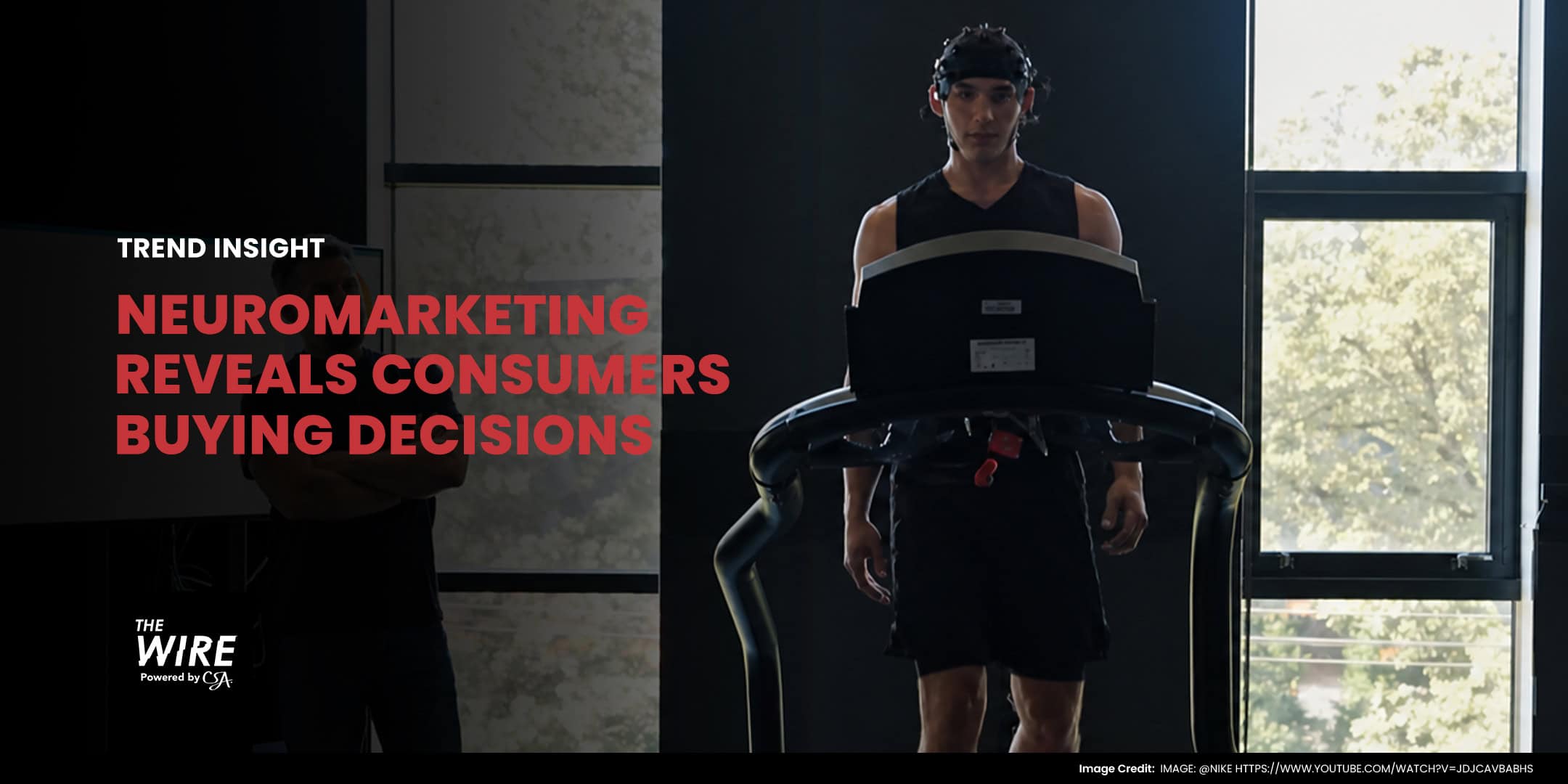
- Nike stopped guessing, they measure feeling, +39% engagement, +33% intent, +28% loyalty
- The real risk isn’t neuromarketing, it’s irrelevance
Neuromarketing is reshaping how brands understand attention, emotion, and decision-making.
Every brand says they are “listening to consumers.” But here’s the reality, most consumers don’t actually know why they choose, click, or care. They rationalise. They justify. They forget.
And in 2026, that gap between what people say and what they feel is where growth is being won or lost. Neuromarketing isn’t a futuristic experiment anymore. It’s a shift in power. From declared intent to decoded emotion. From asking to observing. From guessing to knowing
What’s really happening beneath the surface
Neuromarketing tools don’t ask people what they think. They measure what their bodies and brains do. Your eye movements, micro facial reactions, attention spikes to emotional drops, are all signals that reveal something uncomfortable but powerful. People decide first, then explain later.
That means your campaign isn’t competing on messaging. It’s competing on milliseconds of feeling. Did they look? Did they feel something? Did it stay with them? If not, you’ve already lost them.
The real shift – creativity is now being tested like performance
The brands pulling ahead aren’t just more creative. They’re more precise about emotion.
Take Nike. In 2026, they built a NeuroPerformance Lab to test how campaigns land in the brain before they ever reach the public. Not opinions. Not focus groups. Actual neural response.
The result?
- Engagement up 39%
- Purchase intent up 33%
- Brand loyalty up 28%
CMOs need to sit with the fact that creativity is no longer subjective. It’s is measurable, optimisable, predictable and above all intentional.
And that changes everything.
But here’s the uncomfortable question
Just because you can influence emotion more precisely… should you? Consumers are already overwhelmed. Scroll fatigue is real and trust is fragile. If neuromarketing becomes manipulation, brands lose. If it becomes empathy, brands win.
A clear point of view
Neuromarketing is not about hacking the brain. It’s about removing friction between what people feel and what brands deliver.
When used right, it does three things:
- Cuts through noise by aligning with real attention patterns
- Builds emotional resonance that actually lasts
- Reduces wasted spend on work that “looks good” but doesn’t land
When used wrong, it becomes invisible pressure, and audiences push back.
What this means for marketers now
The role of the CMO is shifting. You’re no longer just managing brand perception. You’re designing emotional experience. Every brief now has new questions:
- Are we directing attention in the first 3 seconds?
- Is there a real emotional arc, or just information?
- Are we memorable, or just visible?
Because visibility without feeling is wasted media. Industry benchmarks reinforce this shift, with neuromarketing driving 15–40% conversion lifts and the market projected to grow significantly over the next decade:
The bigger cultural shift
We are moving from: Content to response. Messaging to memory. Reach to resonance
And the brands that win will not be the loudest. They’ll be the ones that feel the most human. The future of marketing is not more & more data. It’s better understanding of people. Neuromarketing just forces a truth the industry has avoided for years: people don’t buy because they understand. They buy because they feel.
The real question is, are you designing for that… or still guessing?