
- 92 million jobs may disappear, even though culture can’t be automated.
- AI is replacing jobs, but it can’t replace cultural instinct.
- 84% of CMOs now compete for share of culture, not share of voice.
- In the AI era, culture becomes the last unfair advantage.
AI is not just changing work. It is changing culture. And that should worry every CMO.
Because culture has never been built by efficiency. It has always been built by humans, by instinct, by emotion, by communities, by scenes, by creators, by people who feel something before the algorithm sees it.
We are entering a dangerous moment in marketing history. Companies are racing to automate the very people who understand culture: copywriters, designers, strategists, music supervisors, event producers, community managers. The very people who make brands culturally relevant.
And the numbers are not small. AI eliminated nearly 55,000 jobs in the U.S. in 2025. Globally, 92 million jobs could disappear by 2030. Goldman Sachs estimates two thirds of jobs are exposed to automation. McKinsey predicts 3.3 million jobs could be lost in South Africa by 2030.
But here is the question no one is asking: If we automate the people who understand culture, who will tell brands what culture is?
The Real Risk Is Not Job Loss. It Is Cultural Blindness.
Marketing is no longer a battle for share of voice. It is a battle for share of culture.
84% of CMOs now say cultural relevance is more important than traditional advertising metrics.
But culture does not come from dashboards. It comes from streets, clubs, festivals, group chats, dance floors, fashion scenes, gaming servers, and underground movements before they become mainstream.
AI can see patterns. Humans feel shifts. AI can generate content. Humans create movements.
If brands remove the human layer from marketing, they do not become more efficient. They become culturally blind. And culturally blind brands do not grow. They disappear.
AI Is Replacing Execution. Humans Must Own Meaning.
Look at what is already happening:
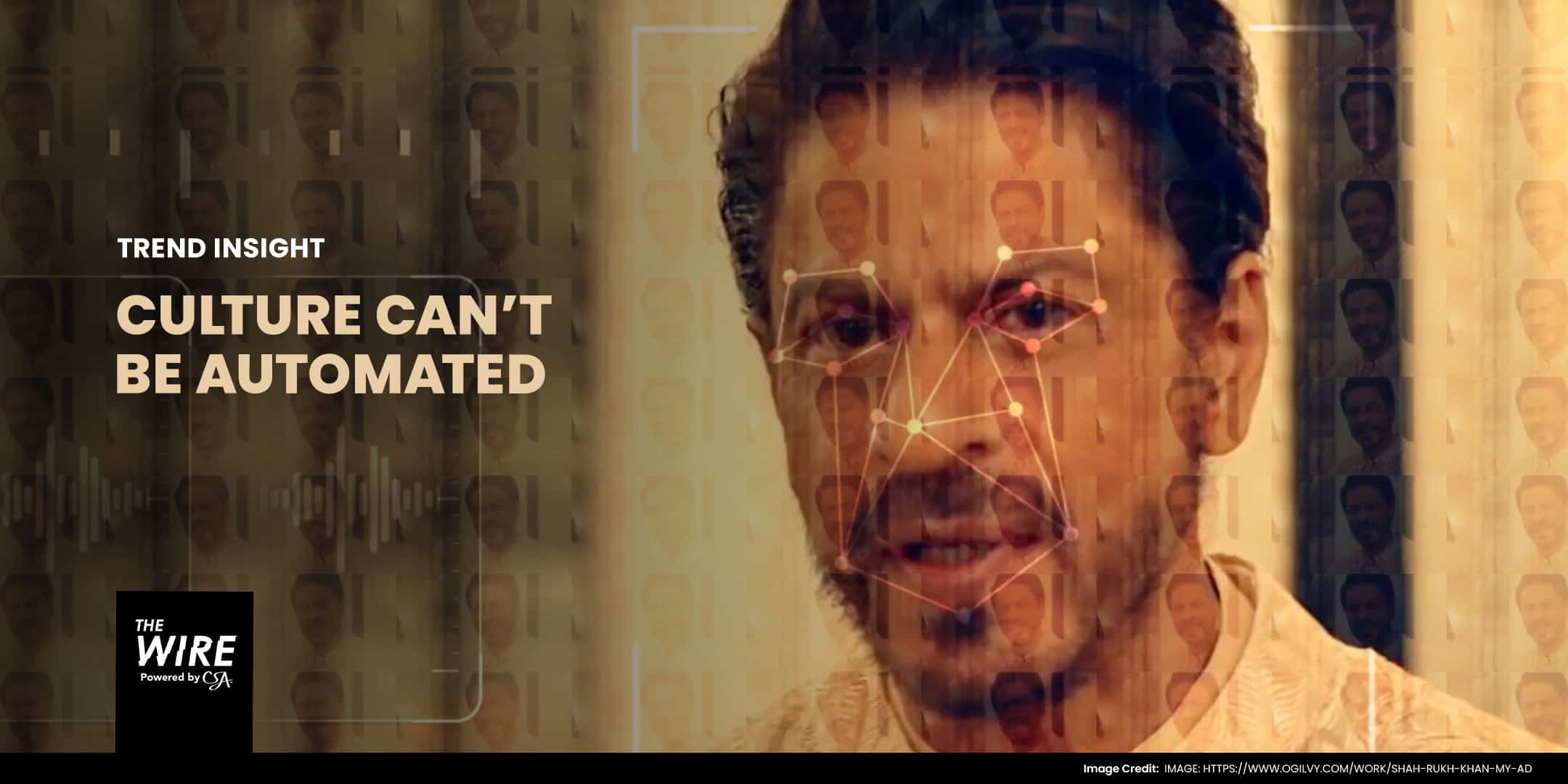
- Cadbury used AI to recreate Shah Rukh Khan for hyper-local ads, sales increased 35%.
- Disney uses AI tools to adapt creative across markets instantly.
- Unilever uses AI to generate visuals across 18 regions at scale.
AI is now handling scale, adaptation, and versioning better than any human team ever could.
Which means the human role is no longer production. The human role is meaning.
Humans must decide:
- What matters
- What feels real
- What people care about
- What conversations brands should enter
- Which creators actually move culture
- Which moments are cultural, not just viral
AI can optimise content. Only humans can decide what is worth optimising.
The African Risk: If AI Flattens Culture, We Lose Our Advantage
Africa’s competitive advantage has never been infrastructure or capital. It has been culture. Music. Fashion. Dance. Language. Energy. Community. Storytelling.
If AI floods the market with generic global content, and we remove the human cultural layer from marketing, we risk flattening the very thing that makes African brands powerful.
At the same time, Africa faces a youth employment crisis, with over 100 million young people needing jobs by 2030. Many of those jobs sit inside the creator economy, events, music, content, and cultural marketing ecosystems.
So this is not just a marketing question. This is an economic question. And a cultural one.
The Smart CMO Move: AI for Scale, Humans for Culture
The winning companies in the AI era will not be AI-first companies. They will be culture-first companies that use AI as an amplifier.
Use AI for speed, data, personalisation, testing, and scale. Use humans for cultural insight, strategy, storytelling, taste, community, and creator relationships. Because in a world where AI makes everything faster and cheaper, culture becomes the only real competitive advantage left.
Final Thought
AI will replace many jobs. That is now inevitable. But here is the real question leaders need to answer: In a company run by algorithms, who is responsible for understanding humans? Because brands that automate everything may become efficient. But brands that understand culture become iconic.
And culture has never been, nor ever will be automated.