
- TikTok’s organic reach is collapsing.
- Some business accounts report view drops of 60–80%.
- On Instagram, only 7% of what you see comes from people you chose to follow.
- Duolingo’s CMO openly admits TikTok now “wants brands to pay for reach.”
- Regulators are already banning under-16s from major social platforms in some markets.
CMOs shouldn’t care about TikTok’s “flop era” because it’s trending. They should care because their brands are quietly renting space in someone else’s culture instead of building one they truly own.
Why This Matters for Culture Marketing
For culture marketers, TikTok’s “flop era” marks more than a platform shift. It exposes the myth that lasting cultural relevance can be built by pleasing a single algorithm. Early TikTok rewarded experimentation, weirdness and niche communities with outsized reach. Today, however, it increasingly favours pay-to-play, safer formats and recommendation systems brands don’t control.
Consequently, the challenge for 2027 isn’t creating content people scroll past. It’s creating brands people choose to build their lives around.
The Feed Is Cracking
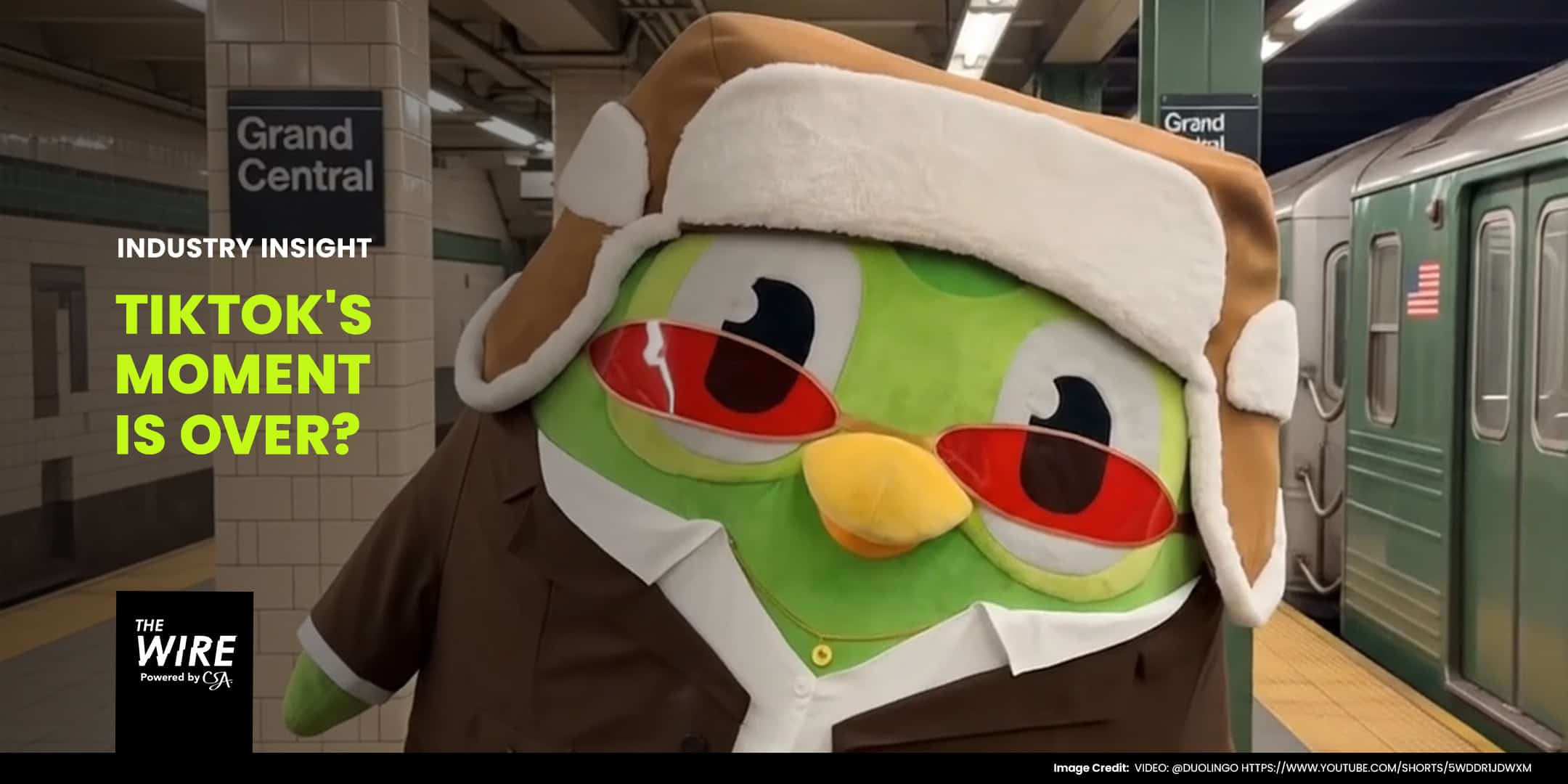
Duolingo’s CMO, Manu Orssaud, recently admitted that organic TikTok reach is stagnating despite 17 million followers. His conclusion is simple: TikTok wants brands to pay for reach. As a result, Duolingo is shifting investment towards creators and emerging platforms instead of endlessly chasing the algorithm.
Meanwhile, regulators are tightening restrictions around addictive feeds and youth social media usage, making the always-on performance model look increasingly fragile. In other words, the era of renting attention from TikTok and Meta is ending, and many media plans recognise it before brand strategies do.
Brands Are Building Culture, Not Just Content
Rather than chasing algorithms, Duolingo is building an ecosystem.
- Dialling back “unhinged” meme content in favour of a consistent, character-led voice.
- Investing in Reddit, WhatsApp and blogs, where communities outlive the feed.
- Taking the Duo mascot into the real world through subway takeovers and live events that generate earned conversation instead of manufactured reach.
Ultimately, this is culture marketing in action. The brand isn’t simply publishing content; it’s creating an ownable world that moves naturally across platforms and into everyday life.
Why CMOs Should Feel This
Three realities stand out.
1. Reach is no longer an asset.
If the algorithm changes, visibility can disappear almost overnight. Culture built only inside the feed is culture built on borrowed time.
2. Brand equity outlasts virality.
Duolingo CEO Luis von Ahn consistently points to long-term engagement and loyalty as the real growth drivers, not short-lived spikes in attention. Increasingly, boards are asking the same question.
3. Audiences follow worlds, not brands.
Analysts see Duolingo’s character-led strategy as part of a broader shift. The brands winning in 2027 won’t shout louder. Instead, they’ll sound more like themselves, more consistently, wherever people encounter them.
If your brand story exists only as content that performs, you’re one policy update, or one fatigued audience, away from cultural invisibility.
The Next Evolution of Culture Marketing
The future of culture marketing is less about hacking discovery and more about architecting belonging.
- From campaigns to ecosystems: Every touchpoint, from TikTok and Reddit to WhatsApp and live experiences, should feel like part of one connected universe.
- From virality to velocity: Success isn’t the biggest spike. It’s the steady accumulation of community, participation and conversation that compounds over time.
- From rented attention to owned infrastructure: Communities, subscriber channels, events and owned platforms become the cultural home base that algorithms merely amplify.
For culture marketers, this future is both confronting and exciting. We can no longer blame declining performance on “the algorithm.” Instead, we’re challenged to create something far more valuable: brands that people genuinely want to belong to.
Because the brands that thrive in the next era won’t be those that mastered the feed. They’ll be the ones that built a culture strong enough to survive without it.