
- 85% of consumers say they will pay more for brands they see as authentic,
- Madonna x Grindr didn’t interrupt Pride culture, they entered it, turning a launch into a moment people wanted to share
- Culture-serving brands don’t just get seen, they spread
- Relevance travels further than reach
One of the big lessons powering through marketing in 2026, is that brands need to stop interrupting culture and start serving it. The payoff is presence and resonance. Furthermore, they are earning relevance by entering culture with precision, utility, and respect.
Authenticity, the New Competitive Advantage
That matters because audiences have become far less forgiving of performative branding. In 2026, 85% of consumers said they would pay more for brands they consider authentic, while 52% said a single inauthentic experience would make them stop buying. The message is clear: brands are no longer judged by how loudly they speak, but by whether they belong.
Brands That Enter Culture Outperform Those That Interrupt It
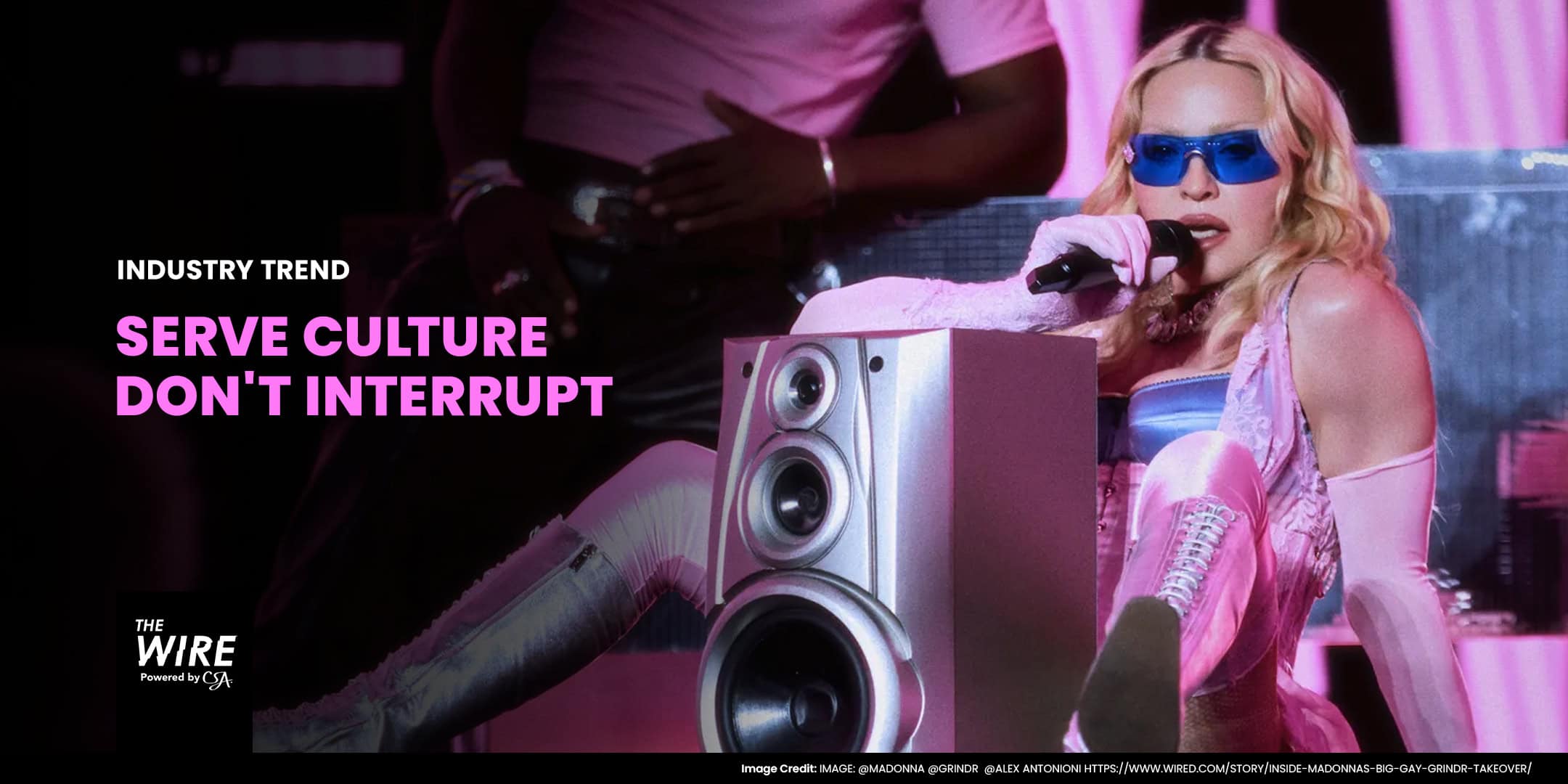
Fresh off the rainbow hued heels of PRIDE, the strongest example is Madonna x Grindr. Instead of forcing a traditional launch, the partnership turned Pride season into a live cultural event: a surprise pop-up concert in Times Square that promoted the artist’s new album Confessions II, while meeting an existing community in its own space. It was not built to interrupt attention. It was designed to inherit momentum.
The New Rules for Building Brand Relevance That Travels
What made it travel globally was not scale alone. It was symbolic clarity. Madonna, Pride, New York, and Grindr each carry distinct cultural meaning, and the activation fused them into one highly shareable moment. The result was instant content lift across entertainment media, social platforms, and fan communities, with coverage and clips circulating well beyond the original crowd., translating into a global moment fuelling streaming discovery.
This is the shift CMOs need to understand: culture-serving work spreads because it feels discovered, not imposed. It gives people something to share because it says something about who they are.
The same logic appeared in other 2026 culture-led campaigns. Gap x Young Miko worked because the brand gave the artist room to move with her community, not around it. Duolingo leaned into its core purpose by offering four months of Super Duolingo for free with a “Bad Bunny 101” course when he was announced as the halftime performer, turning a cultural moment into a useful, real-time language-learning perk. These are not “campaigns” in the old sense. They are participatory acts of brand behaviour.
The 2027 Playbook: Designing Brands That Belong, Not Just Advertise
For CMOs, the playbook is simple:
- Build around existing rituals, not hypothetical audience segments.
- Make the brand useful inside the cultural moment.
- Prioritize specificity over broad appeal.
- Design for social circulation from the start.
- Measure credibility, not just reach.
Taking your brand powerfully into 2027 requires an awareness and sensitivity to the nuance, language and expression of culture. It enables your brand narrative to be engraved, not flash and fizzle out. When culture allows you to stay, the message travels further than media spend ever could.