
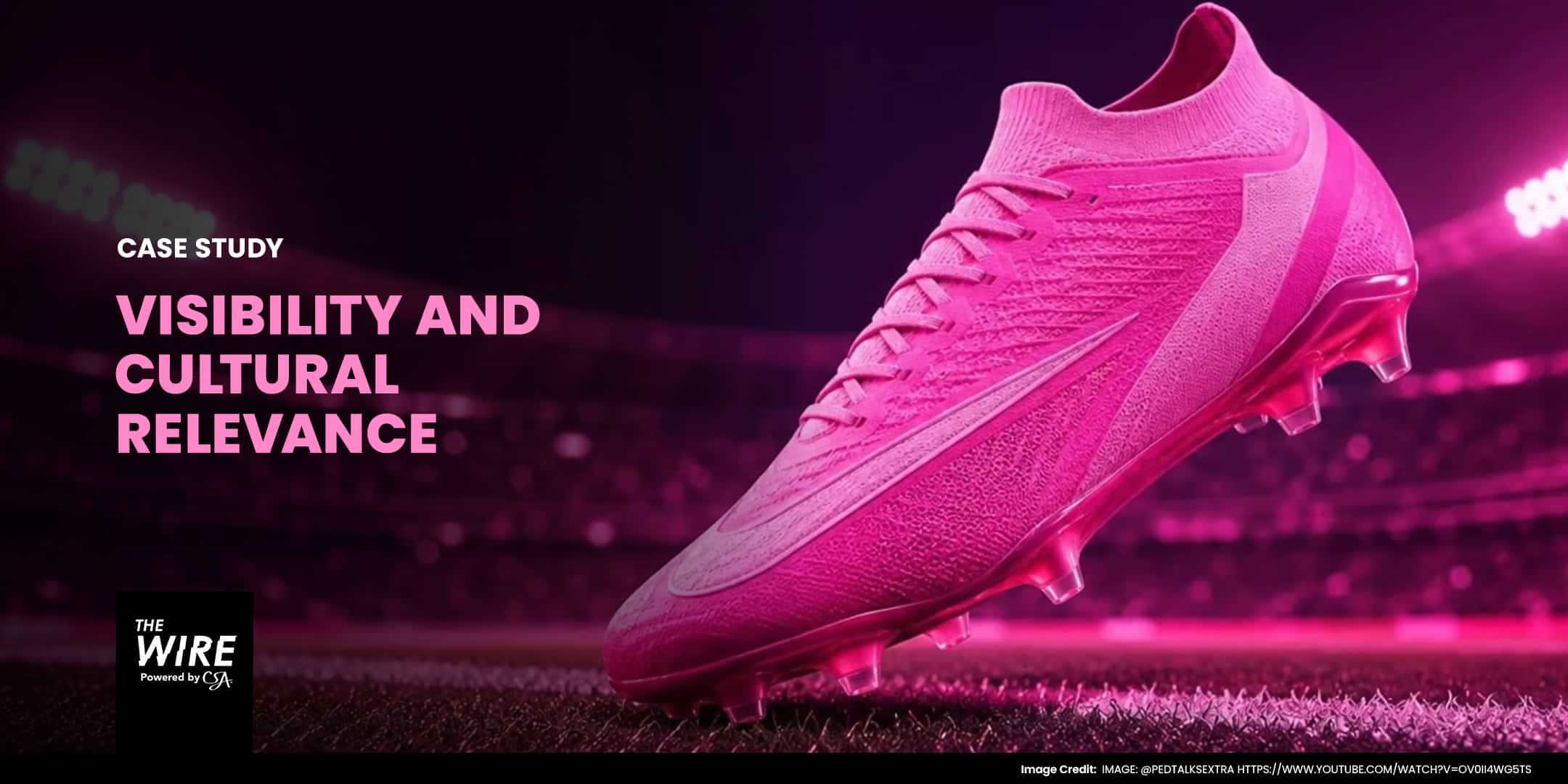
- One colour dominates the world’s biggest stage as 6 billion people watch
- “Colour has become a commercial currency,” says sports economist Madeleine Chant
- WGSN identified “Electric Fuchsia” as a defining 2026 colour trend years before kick-off,
- The real battle isn’t for market share, it’s for cultural relevance
If you’ve watched the 2026 FIFA World Cup, you’ve probably noticed something beyond the football itself: pink is everywhere.
From Nike’s Breakout pack to Adidas’ Road to Glory collection, bright fuchsia boots have become one of the tournament’s defining visual signatures. But this isn’t simply a fashion moment. It’s a masterclass in culture marketing.
The FIFA World Cup is expected to engage approximately six billion people globally, making it one of the largest cultural stages on earth. FIFA estimates that more than six million fans will attend matches, while brands are projected to spend $10.5 billion globally on World Cup-related advertising and sponsorship activity. In a world of unprecedented attention scarcity, visibility has become commercial currency.
Visibility Is the New Battleground
And pink delivers visibility.
Against the green of the pitch, bright fuchsia creates maximum contrast across stadiums, television broadcasts and, critically, social media feeds. As New Balance’s Head of Product, Rob Sheldon, observed: “What you are seeing at this World Cup is the merging of two trends.” The first is the relentless pursuit of visibility. The second is culture itself.
Football boots are no longer merely performance equipment. They have become fashion statements.
When Performance Products Become Cultural Signals
Modern athletes are global brands, cultural tastemakers and creators. Every appearance on the pitch is simultaneously a sporting performance, a content moment and a style statement. As sports economist Madeleine Chant notes, “In sports economics, where athletes lead, colour has become a commercial currency.”
That currency extends far beyond aesthetics.
“It does more than just dress up the product: it turns cleats, kits, and accessories into cultural signals,” says Chant. In other words, colour now communicates identity, confidence, individuality and belonging before a player even touches the ball.
What’s particularly fascinating is that Adidas, Nike, Puma, New Balance and Skechers all arrived at remarkably similar shades of pink at almost exactly the same time.
Coincidence? Not likely.
Culture Leaves Clues Long Before Campaigns Launch
Back in 2024, trend forecasting agency WGSN identified “Electric Fuchsia” as one of the defining colours for Spring/Summer 2026, describing it as a colour with a distinctly digital and expressive energy. By the time the World Cup arrived, the fashion industry, sportswear brands and broader culture had all converged around the same cultural signal.
As designer Christian Treser explains: “That happens when marketing and trend analysis see and use the same sources.”
For marketers, this is the real lesson.
The most successful brands are able to mine and magnify the signals of culture. They identify emerging behaviours, aesthetics and identities early, then amplify them through products, partnerships and storytelling.
The Branding Opportunity Hidden in Colour
Colour remains one of the most underutilised assets in modern brand building. Used strategically, it can create distinction, spark conversation and transform products into cultural symbols.
At the 2026 World Cup, pink boots are doing exactly that.
Because in today’s attention economy, brands don’t just need to be seen.
They need to mean something.